About Brius Technologies
Brius Technologies Inc (brius.com) is an orthodontic technology company based in Carrollton, Texas. Its Brava system is a hidden appliance: instead of sitting on the front of the teeth, it works from behind them using what the company calls Independent Movers — flexible nickel-titanium arms that run from a rigid anchorage base to each individual tooth, so every tooth is moved along its own planned path rather than being pulled by its neighbours. That is what lets Brava treat moderate to complex cases while staying, in the company’s words, “gentle, discreet and personalized for each smile”. Every appliance is made for one patient and manufactured in the United States by Brius itself, an FDA-registered device manufacturer, and the treatment planning behind it runs in the company’s own Brius Planner Software, which received FDA 510(k) clearance in 2021.
The Challenge
When every appliance is made for one patient, the software becomes the production line. Each case arrives as raw clinical data — intraoral scans and, where available, a CBCT — which has to be segmented and turned into a 3D treatment simulation complete with roots and bone, then into an appliance whose anchorage base is fitted to within half a millimetre of that patient’s own anatomy. Getting there means segmenting scans, converting them into workable geometry, editing, aligning, inspecting and exchanging mesh data between systems, case after case. Performed by hand, that chain of steps does not scale. To run it at production volume, Brius Technologies needed it automated — which meant the algorithms underneath had to be fast, modern and dependable enough to sit inside a regulated, cleared software product, and broad enough to cover the full range of orthodontic tasks rather than a single isolated operation. The same team also needed room to keep testing new ideas without standing up a second, separate geometry stack to do it.
The Solution
Brius Technologies built its workflow automation on the MeshLib API, using one library to cover its orthodontic geometry tasks end to end:
Dental & Geometry Oriented Algorithms: advanced, modern and efficient algorithms that cover many orthodontic-related tasks, not just one of them.
CT & Intraoral Scan Segmentation: turning raw patient scans into workable 3D data at the start of the pipeline.
Voxel & Boolean Operations: the volumetric and solid-modeling core the appliance geometry is built on.
Editing, Aligning, Visualization & Inspection: the everyday mesh work in between — plus import and export of mesh objects to move data between systems.
One Versatile API for Production and R&D: the same API runs the production pipeline and backs fast prototyping and testing of new ideas.
The Results
With MeshLib in place, Brius Technologies was able to automate many of its workflow processes — the scan segmentation, voxel and Boolean operations, editing, aligning, visualization, inspection and mesh import/export that a personalized orthodontic pipeline depends on. Because one versatile API covers all of it, the same geometry stack serves both sides of the company: it runs in production, and it gives R&D a way to prototype and test new ideas quickly against exactly the code that ships.
In Their Words
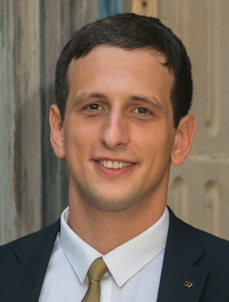
“With MeshInspector MeshLib we were able to automate many of our workflow processes, thanks to its advanced, modern, and efficient dental and geometry oriented algorithms, covering many of our orthodontic-related tasks: CT and intraoral scan segmentation, voxel and Boolean operations, editing, aligning, visualization, inspection, and import/export of mesh objects. We use the versatile MeshInspector MeshLib API, both in production and R&D for fast prototyping and testing of our ideas.”
— Ruedger Rubbert, Chief Technology Officer, Brius Technologies Inc