Pros and Cons of Real-Time Boolean Operations

Boolean operations — union, difference, and intersection — are the backbone of constructive solid geometry (CSG). Running them in real time, so the model updates the instant a user drags a cutting tool, unlocks a genuinely interactive modeling experience. It also pushes the underlying algorithms to their limits. This article weighs the pros and cons of real-time Boolean operations and shows how to choose the right engine.
What Are Boolean Operations in 3D?
Union, Difference, and Intersection
Union merges two solids, difference subtracts one from another, and intersection keeps only the overlapping volume. Chaining these is how complex parts get built from primitives.
Union · A ∪ B
Merge two solids into one combined volume.
Difference · B − A
Subtract one solid from another to cut features.
Intersection · A ∩ B
Keep only the volume the two solids share.
From Batch to Real-Time
Traditionally Booleans ran offline: press a button, wait, get a result. Real-time Booleans recompute continuously as parameters change, giving live feedback — the difference between a still photo and a video.
How Real-Time Boolean Operations Work
Surface (Mesh) Booleans with Corefinement
The classic approach intersects the two surface meshes, cutting each along their shared intersection curves (corefinement), then keeps the correct patches. Interactivity comes from BVH/AABB spatial acceleration to find intersecting triangles fast, exact or adaptive-precision predicates for robustness, and parallel execution across cores.
Voxel / SDF Booleans
Convert each mesh to a signed distance field and combine the fields with simple min/max operations, then re-extract a surface. This is trivially robust — it never fails on messy input — but resolution-bound.
BSP-Tree CSG
Binary space partitioning trees classify space as inside/outside and are a lightweight route to real-time CSG for moderate geometry.
Pros of Real-Time Boolean
Five reasons live Booleans change the way people model.

Instant Visual Feedback
Users see the result as they act, making complex modeling intuitive.
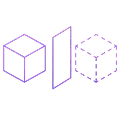
Faster Iterative Design
No wait between edits means far more design iterations per hour.

Non-Destructive Workflows
Parametric Booleans let you tweak an earlier cut without rebuilding.
Better UX Where It Counts
In dental, CAD preview, and sculpting, live Booleans make the tool feel professional.
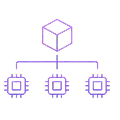
Scales With Parallel Hardware
Work spreads across every CPU core, so performance tracks the hardware you already have.
Cons of Real-Time Boolean
Five constraints every real-time Boolean engine has to negotiate.

Speed–Robustness Trade-off
Exact arithmetic is correct but slow; floating-point is fast but can fail. Balancing them is the central challenge.

Sensitivity to Input Quality
Surface Booleans need clean, manifold input — holes or self-intersections make them fail, which is why they pair with mesh repair.

Voxel Booleans Cost Memory
The SDF route is robust but resolution-limited — it rounds off sharp edges and eats memory at high resolution.

Complexity Growth
Each Boolean adds triangles along the cut. Chain many and the mesh bloats, eroding quality and framerate unless you remesh.

Exactness + Framerate at Scale
Holding interactive framerates on multi-million-triangle meshes while staying exact is hard — the honest answer is often a compromise.
Surface vs. Voxel Boolean: Choosing the Right Engine
Here is how the two engines compare on the criteria that decide which one fits your data:
| Criterion | Surface Boolean | Voxel Boolean |
|---|---|---|
| Precision | Exact, sharp features preserved | Resolution-limited |
| Robustness on messy input | Needs clean input | Extremely robust |
| Speed | Fast on clean meshes | Predictable, resolution-bound |
| Memory | Low | Higher |
| Best for | Clean CAD-like geometry | Noisy scans, defective meshes |
Conclusion — Is Real-Time Boolean Worth It?
For interactive modeling, yes — the productivity and UX gains are decisive. The caveat is that “real time” is always a negotiation between speed, precision, and robustness. The best results come from pairing a strong Boolean engine with reliable mesh repair and picking the surface-vs-voxel path that fits your data.